Valorant low cortisol aim delivers a calm Phoenix duelist setup you can copy for steadier crosshair placement
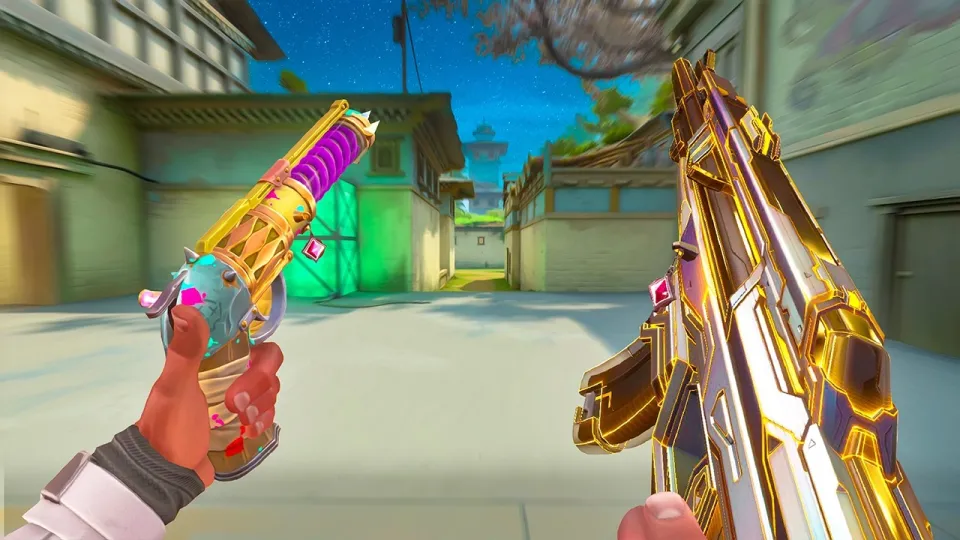
Video: low cortisol aim..
You can order the same kind of articles for your own video to boost it on YouTube and Google. Just message the Telegram bot @sat_sit_bot. Articles with your video embedded are written and posted by the bot itself — on popular topical sites (no ads). Try it free: 50 articles on us.
Valorant low cortisol aim is a calm-aiming approach where you win duels with pre-placed crosshairs, patient peeks and clean Phoenix utility instead of frantic flicks. Rawzu's video "low cortisol aim.." shows the concept in practice: a Phoenix main playing with a deliberately unhurried style, backed by a fixed setup of 400 DPI, 0.625 in-game sensitivity, 1440x1080 resolution and crosshair 1-6-2-2. If you want the same starting point, the creator points viewers to PC optimization for Valorant via Hone, which covers the system-side tuning that keeps frame times stable.
What low cortisol aim actually means in Valorant
Low cortisol aim is the opposite of adrenaline aiming: you reduce the number of decisions per duel so your hand stays relaxed and your crosshair arrives before the enemy does. In Valorant, where a Vandal or Phantom headshot ends most fights in under a second, the player who is already aimed at the right angle usually beats the player with faster raw flicks. The term borrows from the idea of keeping cortisol, the stress hormone, low during ranked games: no panic spraying, no over-flicking, no chasing kills across the map.
Rawzu's clips fit that mold. The Phoenix gameplay is built around walking angles, holding tight crosshair placement at head level, and using abilities to remove the need for a hero shot. A calm aim style does not mean slow reactions; it means the reaction is spent on a small correction rather than a full 180-degree swipe.
The exact Valorant settings behind the calm aim style
Rawzu's setup is published in the video description and is worth copying as a baseline rather than a magic formula. The numbers:
- Sensitivity: 400 DPI with 0.625 in-game sensitivity, a low effective sensitivity that rewards arm movement and stable tracking.
- Resolution: 1440x1080, a stretched 4:3-style aspect that widens enemy models on screen.
- Crosshair: 1-6-2-2, a compact crosshair that keeps the center of the screen readable.
- Mouse: Logitech G Pro X Superlight 2, a lightweight wireless shape.
- Mousepad: Artisan Zero Soft, a control-oriented pad that adds stopping friction.
- Monitor: Zowie XL2566K at 360Hz, which reduces visible motion blur during fast peeks.
A low sensitivity plus a control pad is the hardware half of low cortisol aim: the setup physically discourages overshooting. The other half is the routine described in the next section.
How to build a calm aim routine around Phoenix
Phoenix is an offensive duelist whose kit removes the need for risky aim duels, which makes him a natural fit for a low-stress aiming style. His Curveball flash blinds enemies even when they hide behind corners, Blaze creates a vision-blocking wall that also damages anyone pushing through it, and Hot Hands adds a molotov-style area denial plus self-healing. Run it Back gives him a second life if a duel goes wrong.
A practical routine for translating that into calmer aim:
- Flash first, aim second. Send Curveball around the corner, then swing with the crosshair already at head height instead of flicking after the flash pops.
- Use Blaze to shorten angles. A wall cuts the number of places an enemy can appear, so your crosshair has fewer positions to cover.
- Pre-aim common holds. Walk the map in a custom game and stop your crosshair on the exact pixel where a defender's head appears.
- Play one duel at a time. After a kill, reset to a default angle rather than sprinting into the next fight.
- Keep the mouse hand loose. Grip pressure is the fastest way to turn a calm aim style into a tense one.
Common questions about calm aim and this playstyle
Viewers regularly push back on calm-aim content, and the doubts are fair. Some joke that the gameplay looks like a different game entirely, others ask what was said at a specific moment, and a few want a full settings breakdown. The recurring themes are worth addressing directly.
First, calm aim is not passive aim. Rawzu's Phoenix still takes fights and pushes sites; the difference is that the fights are chosen and pre-aimed. Second, movement matters as much as the mouse. Several comments single out the movement as the standout quality, which tracks with the style: strafing, counter-strafing and peeking with intent make the crosshair placement look effortless. Third, the settings are a starting point, not a guarantee. A 0.625 sensitivity at 400 DPI suits arm aimers with large desk space; players on small desks often need something higher.
Finally, the flashy moments in the video are not the whole method. The clips that look impossible are usually the result of a flash, a wall or a pre-aimed angle doing most of the work before the shot happens.
Useful links from the video
- Optimize your PC for Valorant with Hone — the creator's recommended tuning service for steadier frames.
- Rawzu's original music on Spotify — the tracks used across the channel.
- Rawzu's Discord community — the place for settings talk and clip discussion.
The takeaway from Rawzu's low cortisol aim approach
Low cortisol aim in Valorant is a discipline more than a setting: place the crosshair early, let Phoenix's Curveball and Blaze create the advantage, and keep the hand relaxed through every duel. Rawzu's published numbers, 400 DPI at 0.625, 1440x1080, crosshair 1-6-2-2, a Superlight 2 on an Artisan Zero Soft and a 360Hz Zowie, give you a concrete baseline to test. Copy the setup, then spend the real practice time on pre-aim and movement, because those are what make the aim look calm. The Rawzu channel is the source of this breakdown, and if you want the system side handled too, start with Hone's Valorant PC optimization.
Key takeaways
- Rawzu runs 400 DPI at 0.625 in-game sensitivity on a Logitech G Pro X Superlight 2 and an Artisan Zero Soft pad.
- Resolution is 1440x1080 on a Zowie XL2566K at 360Hz, with crosshair code 1-6-2-2.
- The low cortisol aim idea is calm, pre-planned crosshair placement instead of flick-heavy panic aiming.
- Phoenix pairs Curveball flashes with Blaze walls and Hot Hands, plus Run it Back as a second life.
- PC optimization for Valorant is promoted through hone.gg/a/rawzu in the video description.
Source: low cortisol aim.. · Markdown version
Questions & answers
What sensitivity does Rawzu use in Valorant?
Rawzu plays at 400 DPI with 0.625 in-game sensitivity, which is a low effective sensitivity built for arm aiming. Combined with a 1440x1080 resolution, it produces slower, more controlled crosshair movement. Players on smaller desks may need to raise the value slightly to keep full range of motion.
Is low cortisol aim just a slower playstyle?
No. Low cortisol aim means fewer panic decisions and more pre-aimed angles, not avoiding fights. The player still takes duels, but arrives with the crosshair already at head level and uses utility like Phoenix's Curveball to make the shot easier.
Why does Phoenix suit a calm aiming style?
Phoenix has tools that reduce the difficulty of a duel before it starts. Curveball blinds enemies even behind corners, Blaze blocks vision and damages anyone crossing it, and Run it Back gives a second life if a fight goes wrong. That lets a player commit to pre-planned angles instead of relying on raw flicks.
Do I need a 360Hz monitor to aim like this?
No. A high refresh rate monitor like the Zowie XL2566K reduces motion blur and makes tracking smoother, but crosshair placement and movement decide most duels. A stable frame rate matters more than the panel's maximum refresh rate, which is why PC optimization is worth doing first.